
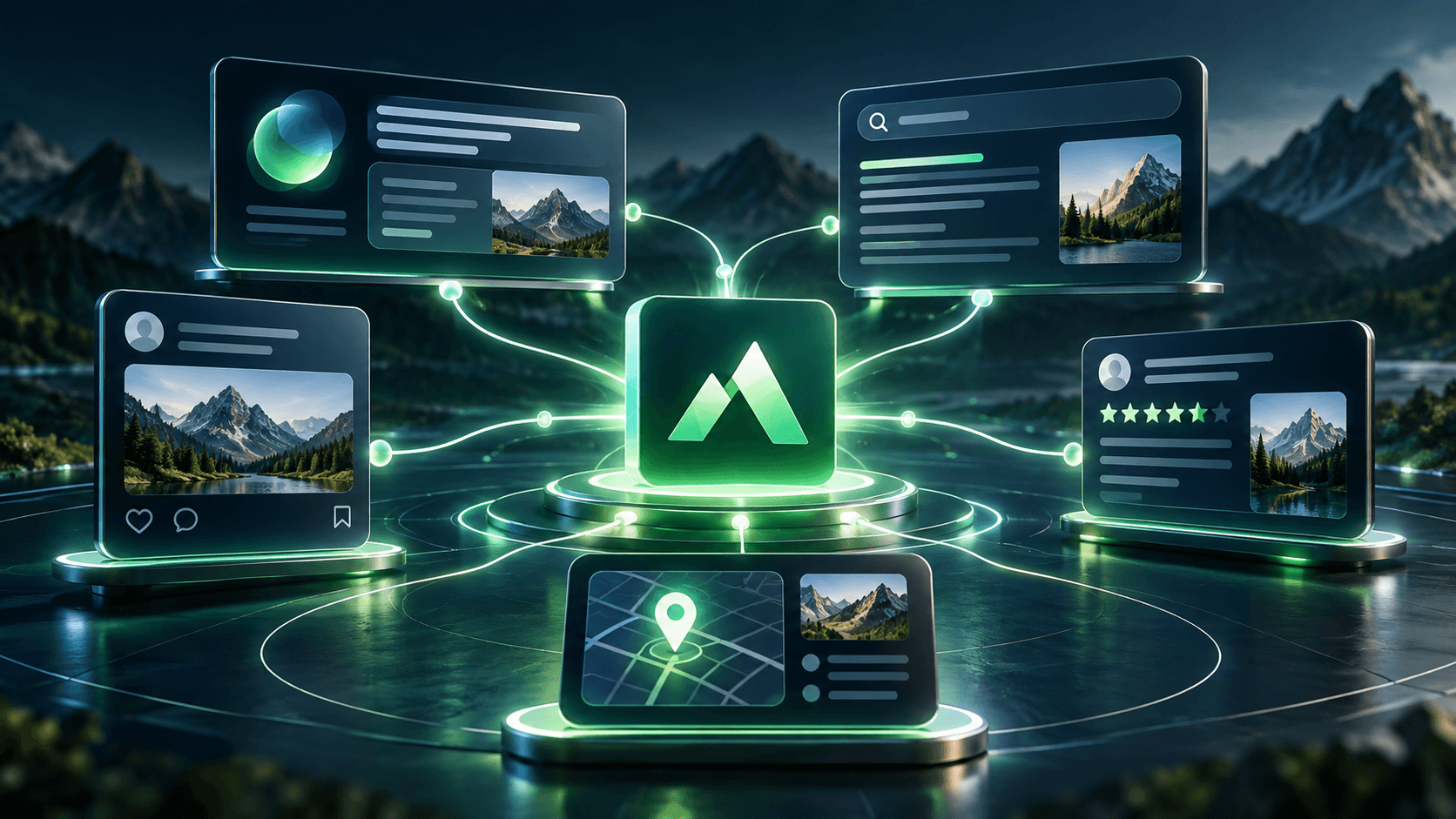
A customer can find your brand, compare it to competitors, read reviews, and form an opinion. Your analytics may not record any website visit yet.
That is the zero-click customer journey.
By the time someone clicks, much of the decision may already have been made.
For marketers, this changes the brief. Visibility can no longer be judged only by website traffic. Brands must be recognizable, useful, and trustworthy wherever customers research a problem. This matters even when the interaction brings no immediate visit.
What Is Zero-Click Marketing?
Zero-click marketing builds brand visibility, trust, and demand on platforms. People can get useful information there without clicking on your website.
The idea began with zero-click searches. These are queries answered on the search results page. They use featured snippets, maps, knowledge panels, and other rich results. The definition is now wider. AI-generated answers, social search, creator content, review platforms, and online communities can influence buying decisions. They may do so without sending a measurable referral.
This is not marketing without a website. It is marketing that recognizes the website is one part of a broader discovery system.
A useful answer in Google can create recognition. A clear explanation in an AI response can place a brand on a shortlist. A thoughtful LinkedIn post can establish expertise. Several consistent reviews can remove doubt. None of those moments needs to create a click to create commercial value.
Why Zero-Click Journeys Matter Now
Search and discovery are becoming more conversational and more distributed. Google keeps building AI-powered search tools. More customers now use ChatGPT, Gemini, and Perplexity. They use them to research options and compare providers. Social platforms and communities are also used as search engines, particularly when people want opinions, demonstrations or real-world experience.
The clicks that do happen can also carry stronger intent. Someone may reach your site after reading an AI summary, checking reviews, and seeing your expertise elsewhere. They may be further along in their decision than a visitor from a broad search.
This is why traffic needs context. A smaller number of well-informed visitors can be more valuable than many people with little intent.
Where Customers Meet Your Brand Before the Click
The zero-click journey is not controlled by one platform. It is built from several connected surfaces.
Search results and local discovery
Featured results, business profiles, maps, image results and rich snippets can communicate your relevance before a customer visits. Clear page structure, accurate local information, schema markup and useful answers improve the chance of earning this visibility.
AI answers and recommendations
AI platforms assemble responses from information they can find, interpret and trust. They look beyond one landing page. Clear entities, consistent brand facts, expert content, and independent mentions help systems see your business is relevant. Credible citations also help.
This is where traditional SEO and AI Search Optimization should work together. Strong technical foundations make information accessible; clear, evidence-led content makes it worth using.
Social search
Customers search LinkedIn, Instagram, YouTube, TikTok and other platforms for ideas, proof and practical advice. A platform-native post may answer the immediate question, but it can also create a branded search days later.
Funnel North recently made the point that marketing activity only creates value when it connects to clear business goals. That principle matters especially here: we should not produce social content simply to stay visible. Each post should strengthen a theme the brand wants to own.
Reviews and third-party validation
Customers often trust evidence that does not come directly from the company. Reviews, directory profiles, expert contributions, podcasts, partner pages and trade publications can all influence perception. These sources may also help search and AI systems verify what a business does.
The Zero-Click Visibility Framework
A practical zero-click strategy needs more than scattered content. The following five-part framework helps connect discovery with commercial outcomes.
1. Make the brand easy to discover
Start with the questions customers ask before they know which provider to choose. These are rarely limited to service keywords. They include definitions, comparisons, costs, risks, alternatives and signs that it is time to act.
Map those questions across search, AI tools and relevant social platforms. Then decide which format best answers each one. A detailed guide may suit Google. A concise comparison may work on LinkedIn. A demonstration may be clearer on video.
2. Make the brand easy to understand
A brand cannot be recommended confidently if its identity changes from one source to another. Keep your business name, services, locations, audience descriptions and specialist terms consistent across the website, profiles and external listings.
On your website, use straightforward page titles, logical headings, descriptive internal links and structured data where appropriate. Funnel North’s SEO approach connects these technical foundations with search intent and commercial relevance.
3. Give people and platforms reasons to trust you
Strengthen important topics with named expertise, original examples, relevant sources, case studies, customer proof and transparent explanations. If you have proprietary data, publish the method alongside the finding. If you present an opinion, explain the experience or reasoning behind it.
Third-party authority matters too. Relevant coverage, expert contributions and genuine industry citations are more valuable than large quantities of weak directory links. This is where a strong backlink strategy and an AI visibility strategy begin to overlap.
4. Create memorable demand
Zero-click visibility is useful only if people remember who helped them.
Generic advice may earn an impression without building recognition. Distinct ideas, a consistent visual style, clear views, and repeatable frameworks help customers connect with your brand.
This does not require forcing the company name into every paragraph. It means creating useful intellectual property, like a named checklist or a diagnostic method. It can also include original research or a clear way to explain a hard subject.
5. Make the next step obvious
Zero-click marketing still needs a route to action. A person ready to learn more should easily find the right service page, case study, contact option, or next article.
When paid media is part of the customer journey, performance marketing should connect the ad to the landing page. It should also connect the landing page to the conversion event. Finally, it should connect the conversion event to the revenue outcome. It should not stop at the click.
How to Create Content That Earns Mentions and Backlinks
A zero-click strategy can strengthen link acquisition when the content offers something worth citing. Rewriting the same advice found on ten other sites rarely creates that reason.
Focus on assets with clear reference value:
Original research with a transparent method
Named frameworks that simplify a complex process
Benchmarks based on credible first-party data
Practical templates, calculators and audit checklists
Expert commentary on a timely industry change
Detailed examples that show how a strategy works
Make the key finding easy to locate and explain. Include a short definition, a clear visual and enough supporting detail for another writer to use the source responsibly.
Promotion matters as well. Share the asset with relevant journalists, partners, newsletters and industry communities. The message should explain why the resource is useful to their audience, not simply ask for a backlink.
How to Measure Zero-Click Marketing
Zero-click influence is harder to measure than a direct referral, but it is not invisible. The mistake is expecting one metric to explain the whole journey.
Track a combination of leading and commercial signals:
Search impressions and visibility across priority topics
Featured result, map and AI-answer presence
Brand mentions and citations on third-party sources
Engagement, saves and shares on platform-native content
Growth in branded search demand
Direct traffic and assisted conversions
AI referral traffic where it is available
Lead quality, conversion rate and revenue
Ask new leads how they heard about the business. Review search queries in forms and sales conversations. Compare changes in branded demand with the timing of campaigns, coverage and high-performing content.
Attribution will remain imperfect because people move between devices, platforms and private conversations. The goal is not to claim certainty where none exists. Combining enough evidence makes better decisions.
A Practical Zero-Click Visibility Audit
Use this short audit to find the biggest gaps:
Search your priority customer questions and record where the brand appears.
Ask leading AI tools to compare providers in your category and review the sources they cite.
Check whether business information is consistent across the website, social profiles, directories and review platforms.
Review whether important service pages answer comparison and decision-stage questions.
Identify topics where competitors have stronger independent mentions or evidence.
Measure branded searches, direct visits, assisted conversions and lead quality over time.
Choose one original asset that journalists, partners or industry writers could reasonably cite.
Repeat the audit periodically. Search interfaces, AI answers, and conversations change, so you cannot treat visibility as a one-off project.
The Website Visit Is No Longer the Beginning
The old customer journey often began with a search and a website click. The modern journey may begin with an AI answer, continue through a LinkedIn post, pass through reviews and finish with a branded search.
Brands that focus only on sessions will miss much of what shapes the decision. Brands that stay useful throughout the discovery journey can earn notice before the click. They can also build stronger intent when the visit finally happens.
Zero-click marketing is not about accepting less traffic. It is about building influence in the places where customers already think, compare and decide.
If your brand is visible but the journey feels disconnected, Funnel North can help align SEO, AI Search Optimization, content, authority and performance measurement around the commercial outcomes that matter. Book a strategy call to find your clearest route north.
Frequently Asked Questions
What is a zero-click search?
A zero-click search is a query that ends without a visit to another website because the user finds what they need directly in the search results, an AI-generated answer, a map result or another platform feature.
Does zero-click marketing replace SEO?
No. SEO remains essential because accessible, well-structured and authoritative web content supports both traditional rankings and newer discovery experiences. Zero-click marketing expands the focus beyond website visits.
How can a brand benefit if customers do not click?
Useful visibility can create recognition, trust, branded searches and later conversions. A customer may encounter the brand several times before visiting directly or contacting the business.
How do AI answers affect zero-click marketing?
AI tools can answer questions, compare options and recommend providers inside the interface. Brands need clear information, strong entities, credible evidence and relevant third-party mentions to improve their eligibility for inclusion.
Which metrics should businesses track?
Track search visibility, brand mentions, and AI citations. Monitor social engagement and branded search growth. Review direct traffic, assisted conversions, and lead quality. Measure revenue. No single metric captures the entire journey.
Can zero-click content attract backlinks?
Yes. Original research, named frameworks, templates, benchmarks and strong expert commentary give publishers useful material to cite. The content still needs targeted promotion to reach relevant writers and partners.