
Marketing can become fragmented surprisingly quickly. One team runs social media, another focuses on paid advertising, and someone else sends emails or updates the website. Each activity may perform well on its own, yet the overall journey can still feel disconnected to the customer.
Full funnel marketing is designed to solve this problem. Instead of treating awareness, lead generation, and customer retention as separate tasks, it combines them into one strategy. Every channel has a purpose, and every stage supports the next.
For growing businesses, this approach can make marketing more focused, measurable and useful. It helps teams understand how people discover a brand. It also shows what encourages them to consider an offer. It explains how they become customers. It also shows how they continue the relationship afterward.
What Is Full Funnel Marketing?
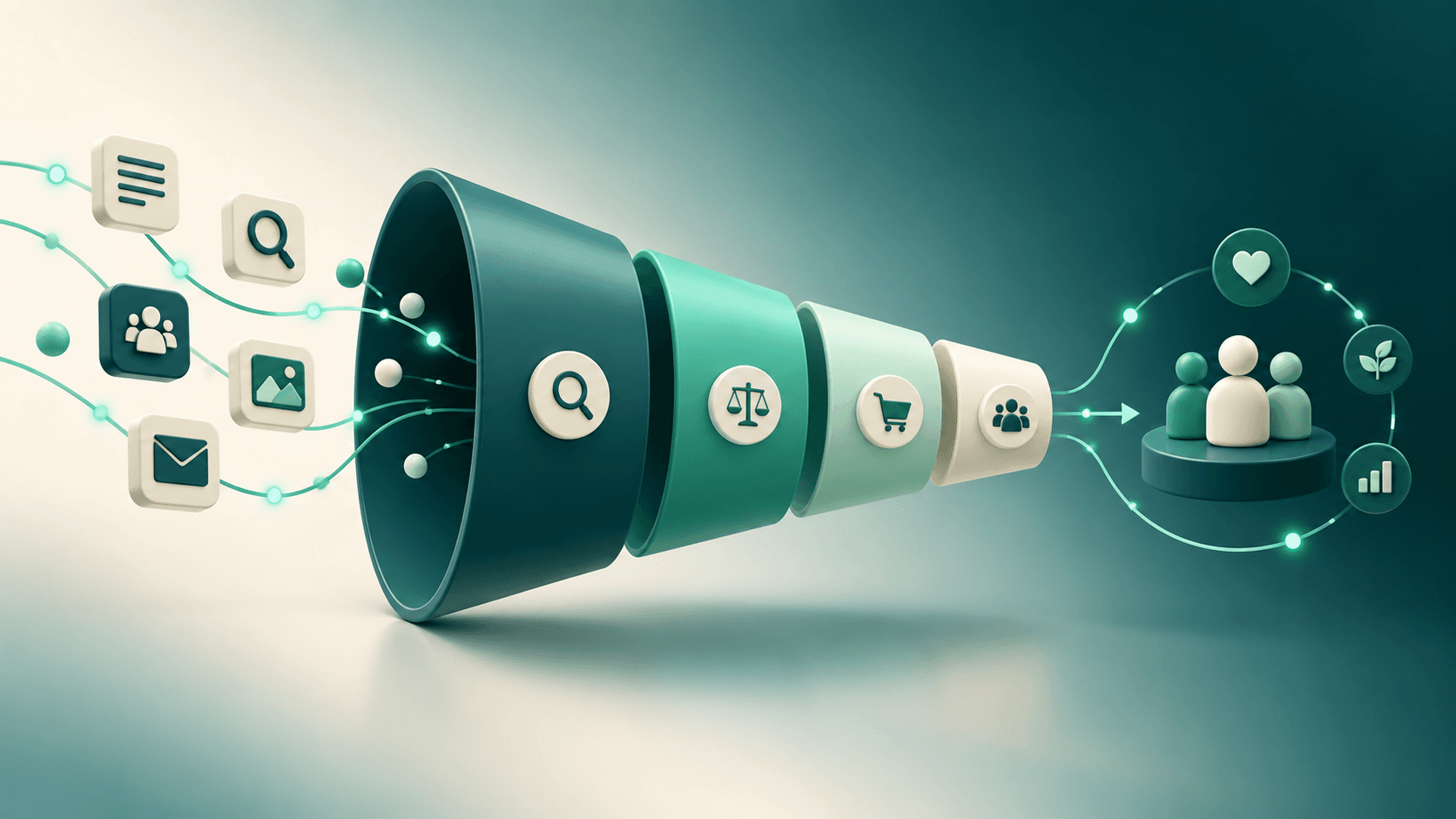
Full funnel marketing is an approach that supports potential customers throughout their entire journey with a business. It covers the stages before a purchase, the decision itself and the relationship that follows.
A typical marketing funnel includes four broad stages: awareness, consideration, conversion and retention. Some models use different names or divide the journey into more steps, but the basic idea remains the same. People need different information and experiences based on how well they know your business.
They also need different things depending on how close they are to a decision.
A person who sees your brand for the first time may not respond like someone comparing your proposal to a competitor. Similarly, an existing customer needs different communication from a new prospect. Full funnel marketing recognizes these differences and plans around them.
Why the Traditional Funnel Can Feel Disconnected
Many businesses already market at several stages of the funnel without realising it. They publish educational content, run adverts, collect enquiries and send follow-up emails. The difficulty is that these activities are often planned separately.
For example, a paid advert may generate strong traffic, but the landing page does not answer the questions raised in the advert. A useful blog may attract readers, but there is no relevant next step. A sales team may receive leads without knowing which content those people viewed or what problem first brought them to the website.
When these gaps appear, businesses may assume they need more traffic or a larger advertising budget. In reality, the greater problem may be the journey between one interaction and the next.
A full funnel marketing strategy looks at those connections. It asks whether the message remains consistent, whether the next action is clear and whether useful information is carried from marketing into sales and customer service.
The Four Main Stages of a Full Funnel Marketing Strategy
1. Awareness: Helping the Right People Discover You
At the awareness stage, the audience may not know your company. They may only be starting to spot a problem. The aim is not to push for an immediate sale. It is to become visible, relevant and memorable.
Useful awareness activity can include educational articles, social media content, search visibility, short videos, public relations and carefully targeted advertising. The strongest content at this stage helps people understand a challenge rather than forcing a service into every conversation.
A growing accountancy firm, for example, might publish a simple guide to cash-flow problems faced by small businesses. A software company might explain why manual reporting becomes harder as a team grows. Both pieces introduce expertise through a real customer concern.
We should still target awareness. Reaching a large number of people means little if they are unlikely to need the service. Clear audience research, relevant topics and appropriate channels matter more than chasing the widest possible reach.
2. Consideration: Building Understanding and Trust
Once people recognize their need and know your business exists, they begin to assess their options. They may visit service pages, read case studies, compare providers, review testimonials or return to the website several times.
Content at this stage should help them judge whether your approach is suitable. Detailed service explanations, practical guides, comparison pages, webinars, email sequences and case studies can all support consideration. The aim is to answer genuine questions and reduce uncertainty.
Trust becomes especially important here. Clear information about the process helps a buyer decide. It should cover likely timescales, pricing, and expected outcomes. Vague claims such as “best in class solutions” rarely provide that clarity.
A good consideration journey also gives people more than one way to move forward. Some may be ready to book a call, while others may prefer to download a guide, view relevant work or join an email list. The next step should reflect the level of commitment they are ready to make.
3. Conversion: Making the Decision Easier
The conversion stage is when a prospect takes an action the business values. This may include buying a product, booking a consultation, requesting a quote, or signing a contract.
At this point, unnecessary friction becomes expensive. Complicated forms, slow replies, unclear packages and inconsistent messages can cause a ready buyer to hesitate. Conversion-focused marketing should make the decision process simple without creating pressure.
Strong calls to action, focused landing pages, relevant proof, clear forms and timely follow-up all contribute. Sales and marketing teams should agree on what makes a useful lead. They should also agree on what details to share when handing over an enquiry.
Conversion is not only about changing button colours or rewriting a headline. Those details can help. The bigger question is whether the prospect has enough relevant information to feel confident.
4. Retention: Continuing the Customer Relationship
The funnel does not end when you make a sale. Existing customers already understand the business and have shown enough trust to buy. Supporting them well can lead to repeat purchases, stronger relationships, referrals and more useful feedback.
Retention activity may include onboarding, helpful email communication, account reviews, customer education, loyalty programs, product updates and responsive support. The right approach depends on the business model, but communication should stay useful, not turn into constant promotions.
This stage also creates valuable insight for the rest of the funnel. Customer questions can inspire educational content. Common objections can improve sales material. Feedback can reveal where expectations were unclear before the purchase.
A full funnel view therefore creates a loop rather than a one-way path. What happens after conversion helps improve what happens before it.
Full Funnel Marketing vs Performance Marketing
Full funnel marketing and performance marketing are not opposites, but they focus on different parts of the picture.
Performance marketing usually concentrates on measurable actions such as clicks, leads, bookings or sales. It can be highly effective, particularly when campaigns have clear conversion goals. However, judging every activity by immediate return can undervalue the work that builds awareness and trust over time.
Full funnel marketing places those performance activities within a wider customer journey. It still measures results. But it recognizes that someone may read an article. They might see a social post. They may return through search. Later, they may convert through an advert. The final click is important, but it is rarely the complete story.
Growing businesses often need both. Performance activity can capture existing demand, while broader funnel activity helps create and nurture future demand.
How Different Marketing Channels Work Together
A full funnel digital marketing strategy does not require a presence on every platform. It requires the selected channels to perform clear roles and connect sensibly.
Search content can attract people who are actively researching a problem. Social media can introduce ideas, build familiarity and bring the people behind the business into view. Paid advertising can extend reach or reconnect with previous visitors. Email can nurture interest and keep communication relevant. Case studies can provide proof when a buyer begins comparing options.
The value comes from coordination. An educational social post might direct interested readers to a detailed guide. That guide might lead to a useful email resource. Later emails can share a case study about the same problem. Then invite the reader to discuss their needs.
Each interaction should feel like part of the same conversation. The tone, promise and audience need should remain consistent even when the format or channel changes.
Benefits of Full Funnel Marketing for Growing Businesses
A clearer customer journey
Mapping the full journey shows where people receive useful support and where they are left without a logical next step. This makes it easier to improve weak connections rather than adding more campaigns without direction.
Better use of marketing content
One strong idea can support several stages when it is adapted carefully. Research from a detailed article can become social content to build awareness. It can become a downloadable guide for people to consider. It can also become a sales resource for relevant conversations.
Stronger alignment between marketing and sales
When both teams understand the journey, sales gets better context. Marketing gets clearer feedback about lead quality, objections, and decision factors.
More balanced measurement
A full funnel approach reduces dependence on one metric. Instead of looking only at traffic or quick sales, a business can assess reach and engagement. It can also assess lead quality, conversion, and customer value together.
Improved customer retention
Planning beyond the initial sale keeps customer communication from becoming an afterthought. A helpful post-purchase experience can strengthen trust and create further commercial value.
How to Build a Full Funnel Marketing Strategy
Step 1: Define the audience clearly
Start with the people the business is best placed to help. Look beyond basic details such as age, location or job title. Understand their priorities, common problems, concerns, decision criteria and the language they use when describing those needs.
Step 2: Map the customer journey
List the common steps from first awareness to repeat business. Identify the questions people ask, the channels they use and the barriers that may slow them down at each stage. The real journey may not be perfectly linear, so include common routes back and forth.
Step 3: Review current marketing activity
Place existing campaigns and content against the journey. This often reveals an imbalance. A business may have plenty of awareness content, but little proof for consideration. Or it may have strong lead generation, with no planned follow-up.
Step 4: Decide the purpose of each channel
Give every active channel a defined role. A blog can support search and education. LinkedIn can build professional awareness. Email can nurture leads. Landing pages can support conversion. A channel can serve more than one stage, but its purpose should still be clear.
Step 5: Create connected content
Plan themes across the journey rather than producing isolated posts. If a key customer problem becomes an awareness topic, create a service explanation and proof. Add a clear next step for later stages.
Step 6: Improve handovers
Review what happens when someone moves from content to a form, from marketing to sales, or from purchase to onboarding. Clear ownership and timely follow-up keep teams from losing valuable interest.
Step 7: Measure and refine
Choose a small set of metrics for each stage and review how they relate. Awareness might include qualified reach and search visibility. Consideration may include engaged visits, email sign-ups or case-study views. Conversion can include lead quality and sales, while retention may include repeat purchases, renewals or referrals.
The purpose of measurement is not to produce the largest dashboard. It is to identify where the journey is working, where it is slowing down and which changes are most likely to improve it.
Common Full Funnel Marketing Mistakes
Treating every audience member as sales-ready
Repeatedly asking new audiences to buy can weaken attention and trust. Early-stage communication should help people understand the problem before pushing a decision.
Focusing only on the top or bottom of the funnel
Some businesses invest heavily in reach but provide little support for evaluation. Others focus almost entirely on conversion adverts and gradually exhaust the same audience. Sustainable marketing needs activity between those points.
Using the same message at every stage
The main brand promise should stay consistent, but the details and call to action should match the customer’s awareness and intent.
Measuring channels in isolation
A social post, article or email may influence a decision without receiving credit for the final conversion. Channel reporting is useful, but you should consider it alongside the wider journey.
Ignoring customers after conversion
Poor onboarding or irregular communication can undo the trust created before the sale. Retention deserves its own plan, ownership and measurement.
How to Measure Full Funnel Marketing
No single metric can explain the performance of an entire marketing funnel. A useful measurement framework combines stage specific indicators with business outcomes.
At the awareness stage, look at whether the right audience is discovering the brand. For consideration, assess whether people are engaging with meaningful content and taking sensible next steps. At conversion, review both quantity and quality rather than counting every enquiry equally. For retention, examine continued usage, repeat business, renewals, referrals or customer satisfaction, depending on the model.
It is also helpful to review the movement between stages. High traffic with very few engaged visits may suggest weak audience relevance. Strong lead numbers with poor sales acceptance may indicate a targeting or qualification problem. Good conversion with low retention may point to unclear expectations or a weak customer experience.
These connections turn reporting into practical decisions. They help a business decide whether to improve targeting, content, follow-up, sales handovers or customer support.
Do Small Businesses Need Full Funnel Marketing?
Full funnel marketing may sound like it is for large organisations with specialist teams. But the principle is also useful for smaller businesses. The implementation simply needs to match the available time, budget and capacity.
A small business does not need dozens of campaigns. It may start with one reliable activity at each stage. Use a helpful article or social series for awareness. Use a clear service page and case study for consideration. Use a simple enquiry process for conversion. Use a thoughtful onboarding or follow-up email for retention.
Starting small makes the journey easier to manage. Once the foundations work well, the business can add new formats and channels. It can do this based on evidence, not pressure.
A Practical Example of Full Funnel Marketing
Consider a growing business that provides outsourced HR support. Its awareness content could explain common people-management problems faced by expanding companies. Readers who want more detail might access a guide to preparing for the first HR hire.
During consideration, the business could share a clear breakdown of its support model. It could share a relevant client story. It could also answer common questions about cost and confidentiality. A focused consultation page would then make it easy for suitable prospects to enquire.
After conversion, a structured onboarding sequence could introduce contacts, explain the first steps and provide useful resources. Regular reviews and practical updates would support retention.
None of these activities is especially complex on its own. Their strength comes from addressing the same audience needs across one connected journey.
Final Thoughts
Full funnel marketing is not about adding more channels or producing content for the sake of activity. It is about making the customer journey more coherent.
When you plan awareness, consideration, conversion, and retention together, you give each marketing effort a clearer purpose. Teams can create more relevant messages. They can use their content better. They can see how different interactions drive growth.
Funnel North helps businesses turn disconnected marketing activity into a practical full funnel strategy. If your customer journey feels disconnected, book a strategy call with Funnel North to identify the gaps and plan your next steps.
Frequently Asked Questions
What does full funnel marketing mean?
Full funnel marketing supports customers through the whole journey. It starts when they first find a business. It continues as they consider the offer and make a purchase. It also helps keep the relationship going after the sale.
What are the main stages of the marketing funnel?
The four common stages are awareness, consideration, conversion and retention. Some businesses use additional stages, but these four provide a practical foundation.
Is full funnel marketing suitable for small businesses?
Yes. Small businesses can apply the approach with a focused set of activities. The priority is to connect the stages clearly rather than use a large number of channels.
How is full funnel marketing different from digital marketing?
Digital marketing describes the online channels and methods a business uses. Full funnel marketing describes how those activities work together across the complete customer journey.
How long does a full funnel strategy take to work?
The timescale depends on the market, sales cycle, starting point and channels involved. Conversion improvements may appear relatively quickly, while awareness, trust and retention usually develop over a longer period.
Which metrics should a full funnel marketing strategy track?
Useful metrics can include qualified reach, search visibility, engaged visits, lead quality, conversion rate, customer acquisition cost, repeat purchases, renewals and referrals. The right selection depends on the business model and goal.